The share of Bitcoin held by small wallets, anyone with less than 10 BTC, peaked on the 1st January 2024.
It has never been higher since.
Yet over the same stretch, roughly 5.5 million new small wallets have appeared on-chain. More wallets, but a smaller slice of the supply.
So where did all of that new retail money actually go?
Trace every coin and the picture looks nothing like the narrative. Just 87 addresses hold more than twice as much Bitcoin as 56 million small ones, only about 13.3 million coins can realistically trade, and since the ETFs launched, one group of wallets has been quietly buying at a record pace.
So let me show you who really owns Bitcoin, how much of it can move, and what that means for price.
Let's get into it.
Insights at a Glance
- Two Thirds Still Private: Individuals and private entities hold about 13.7 million BTC, or 65.4% of the 21 million cap.
- A Much Smaller Float: Only about 13.3 million coins, 66% of everything mined, can realistically trade, and even that is an upper bound.
- Sharks at a Record: Wallets holding 100 to 1,000 BTC have taken in about 1.35 million coins since the ETFs launched, lifting their share to a record 26.3%.
- Shallower Bears: Every bear market has been gentler than the last, and the same shift that explains it changes what the next wave of demand can do to price.
Who Owns All 21 Million
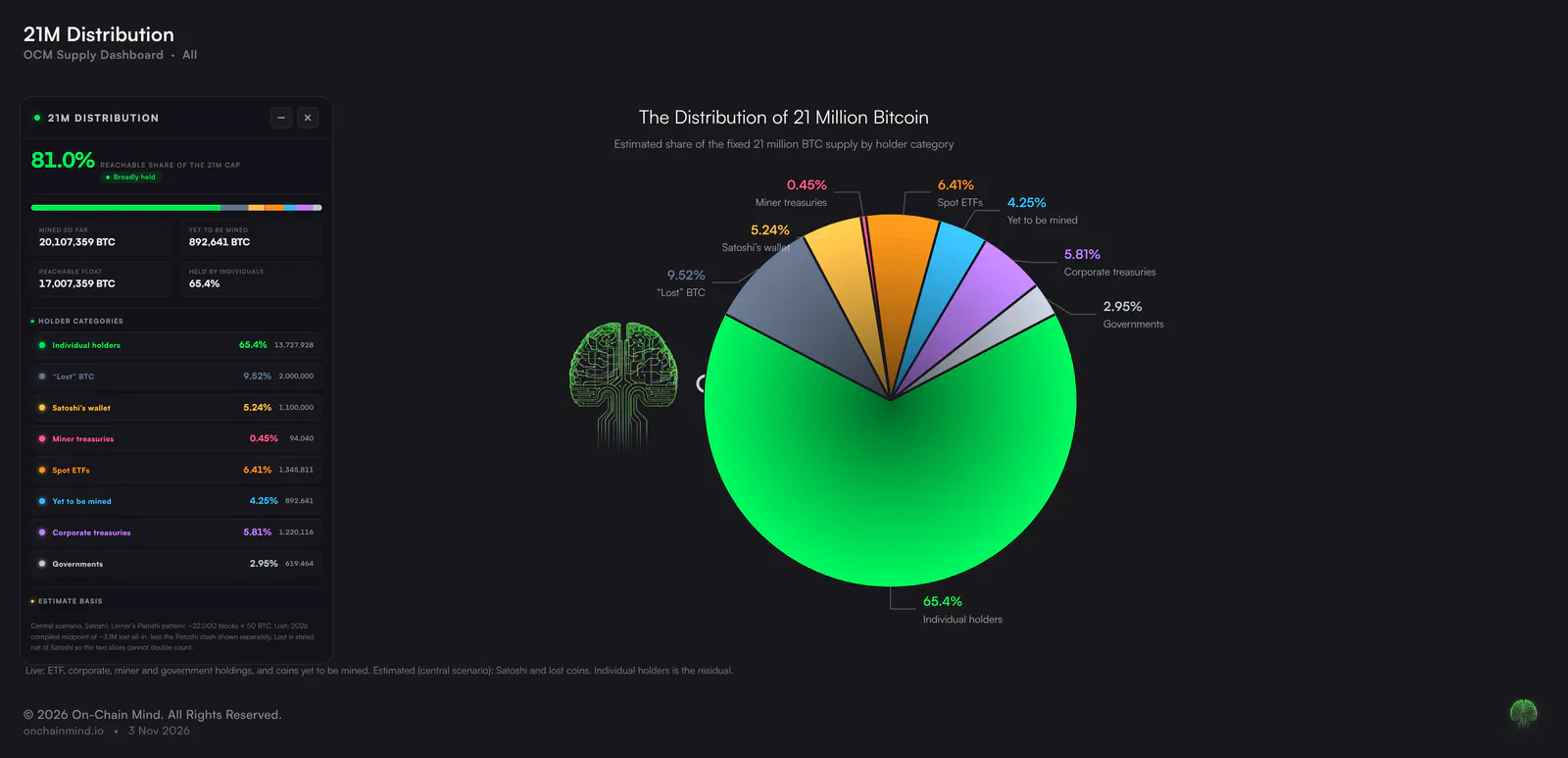
Let's start at the top. The 21M Distribution view splits Bitcoin's hard cap across everyone who could plausibly own a piece of it.
Not all of it exists yet: 892,641 BTC (4.25%) is still to be mined.
Then there are the coins nobody is ever going to spend. Satoshi's stash is estimated at about 1.1 million BTC (5.24%), and another 2 million or so are considered lost (9.52%): forgotten keys, hard drives in a landfill. Lost-coin estimates vary enormously, so treat this as one central estimate of many.
Then we get to the holders everyone talks about:
- Spot ETFs: about 1.35 million BTC, or 6.41%
- Corporate treasuries: about 1.22 million, or 5.81%
- Governments: just under 620,000, or 2.95%
- Miner treasuries: about 94,000, or 0.45%
The miners create every single Bitcoin, yet they keep almost none of it.
Which leaves the biggest slice by far: individuals. About 13.7 million BTC, or 65.4% of the cap, sits with people and private entities on none of these lists.
So for all the talk of Wall Street taking over Bitcoin, roughly two thirds of it is still in private hands.
The Real Float Is Far Smaller
For price, the more useful question is how much of it can realistically trade.
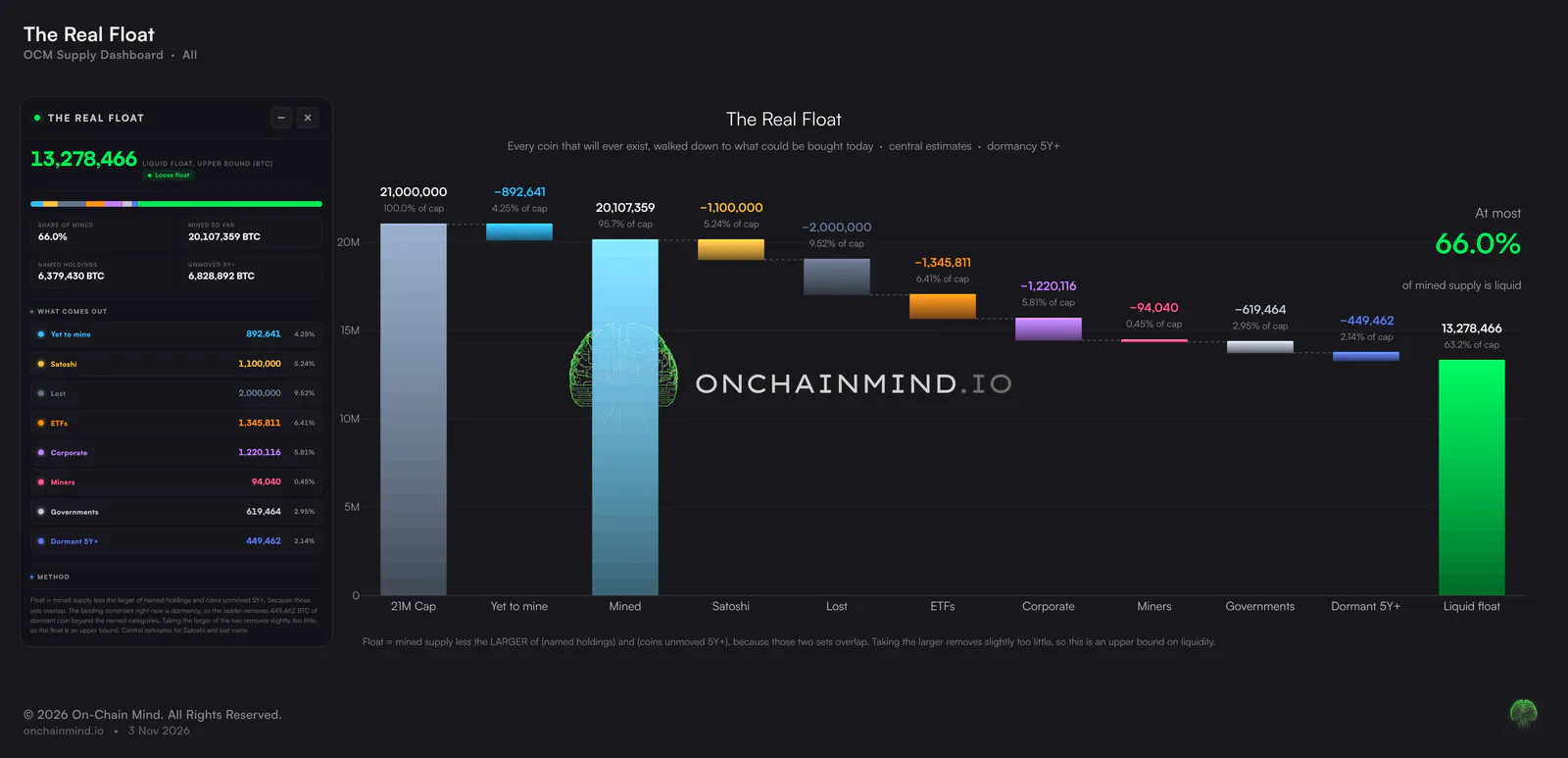
The Real Float view takes the 20.1 million coins mined so far and strips out Satoshi's, the lost coins, every named holder and anything that hasn't moved in over five years.
What's left is what I call the real float: about 13.3 million BTC, or 66% of everything mined.
And that's an upper bound. The named holdings and the dormant coins overlap, so the view removes only the larger of the two, which means the true float is probably a little smaller still.
So of the 20 million Bitcoin in circulation, only around 13 million are realistically available to buy and sell, and every coin that moves into an ETF or treasury and stays there shrinks that pool further.
The Institutional Barbell, Six Months On
So who's doing most of that shrinking?
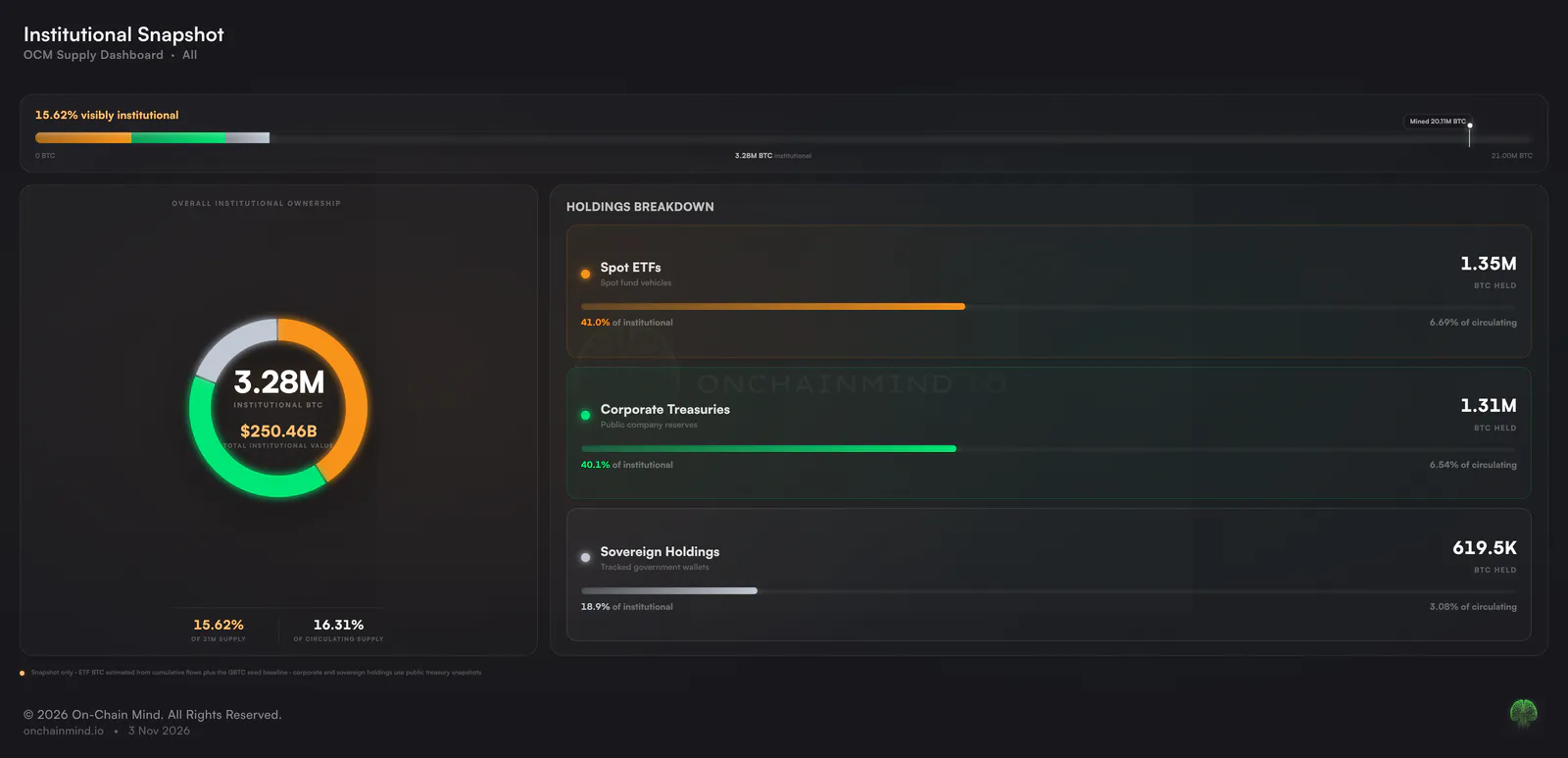
The Institutional Snapshot shows visible institutions now hold 3.28 million BTC, or 16.3% of the circulating supply.
Back in May, when I wrote about "the institutional barbell", that figure was 3.24 million. So it's still edging higher, even through this year's bear market low. But the mix underneath has changed.
In May, the ETFs made up 43% of the stack and corporate treasuries 38%. Today the ETFs are 41.0% and the corporates are 40.1%, so the companies are now within a whisker of overtaking the ETFs. (FYI: this particular view counts listed miners as companies).
Much of that is one company: Strategy holds 849,327 BTC, up about 30,000 since May.
The sovereign slice is 18.9%, mostly the United States with about 330,000 coins and China with about 190,000, largely from seizures rather than purchases.
As I said in May, these groups behave very differently. The ETFs are the liquidity engine, Strategy is the conviction buyer, and the governments are "reluctant HODLers", sitting on coins that get politically harder to sell.
Between them, they are pulling coins out of the liquid float and into something far slower moving. The ETFs alone have taken in a net $4.5 billion over the last 90 days.
87 Addresses vs 56 Million
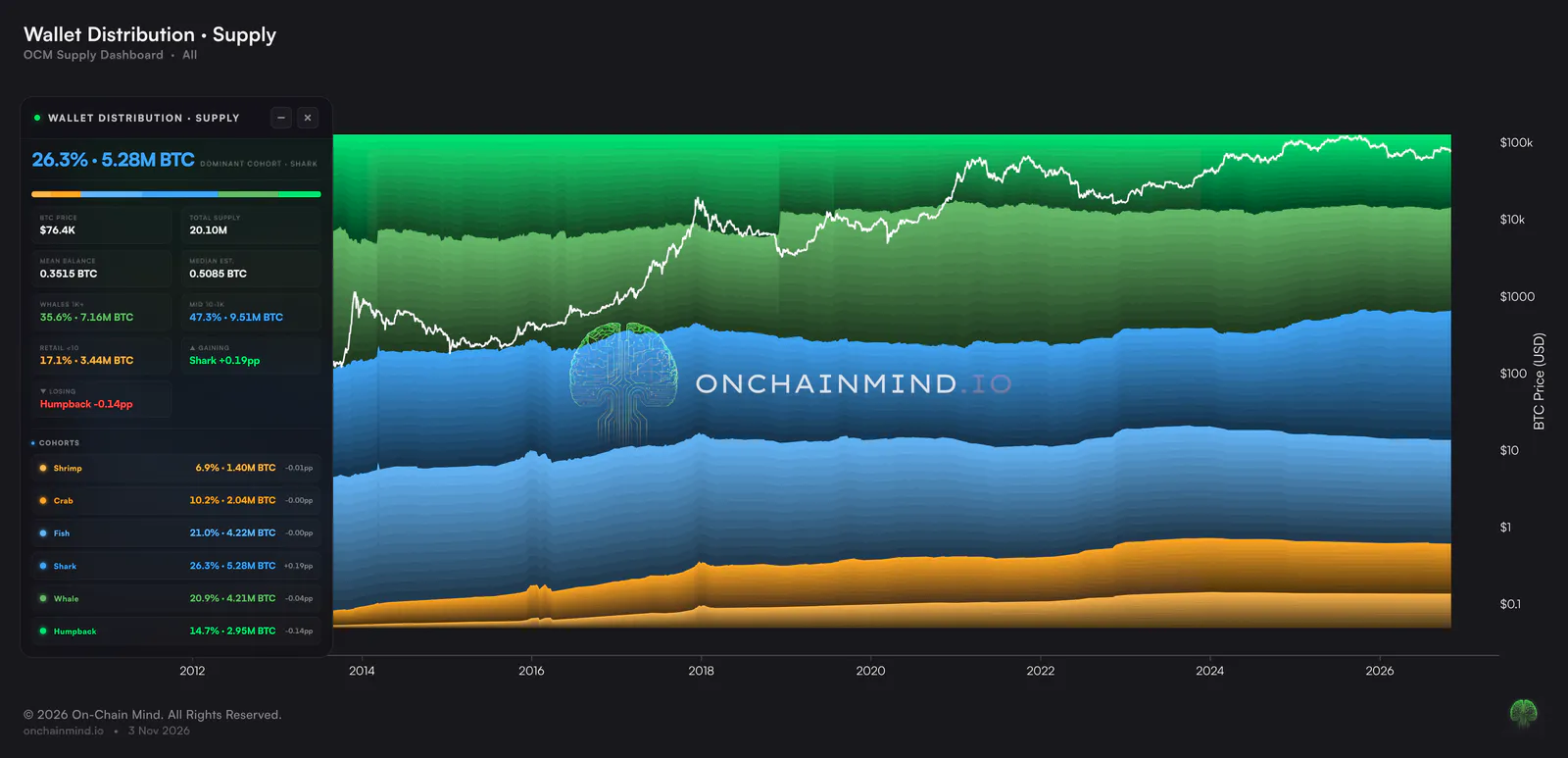
The institutional view only shows the holders who announce themselves. The Wallet Distribution view shows everyone, sorted by how much Bitcoin each address holds.
The on-chain world has given these tiers some pretty fun names:
- Shrimp: less than 1 BTC
- Crabs: 1 to 10 BTC
- Fish: 10 to 100 BTC
- Sharks: 100 to 1,000 BTC
- Whales: 1,000 to 10,000 BTC
- Humpbacks: more than 10,000 BTC
It's remarkably lopsided.
There are about 56 million shrimp addresses, and between them they hold about 1.4 million BTC, or 6.9% of the supply. At the other end there are just 87 humpback addresses, and they hold almost 3 million BTC, or 14.7%.
87 addresses hold more than twice as much as 56 million.
But the real centre of gravity sits in the middle. The fish hold 21.0% and the sharks 26.3%, so the addresses holding 10 to 1,000 BTC hold almost half of the entire supply between them.
There's one big caveat.
These are addresses, not people.
One person can own lots of addresses, and one address can hold coins for millions of people, which is exactly what an exchange or an ETF custodian does. So a humpback is often not one very rich individual, but a custodian. Keep that in mind, because it's the key to the twist.
The Drift That Stopped
So is distribution changing? Over the long run, clearly yes.
At the start of 2013, wallets holding more than 1,000 BTC held 44.3% of the supply and wallets under 10 BTC just 2.3%. For over a decade, coins drifted from the top of the ladder to the bottom.
In fact, the share held by those 1,000+ wallets hit its lowest point ever, 35.3%, on the 28th October 2025, just three weeks after the all-time high. The biggest holders distributed right into the top. Long-term holders sell into strength.
But here's the twist.
The small wallets' share has stopped growing. It peaked at 18.3% on the 1st January 2024, and today it's 17.1%. 10 days after that peak, the spot ETFs launched.
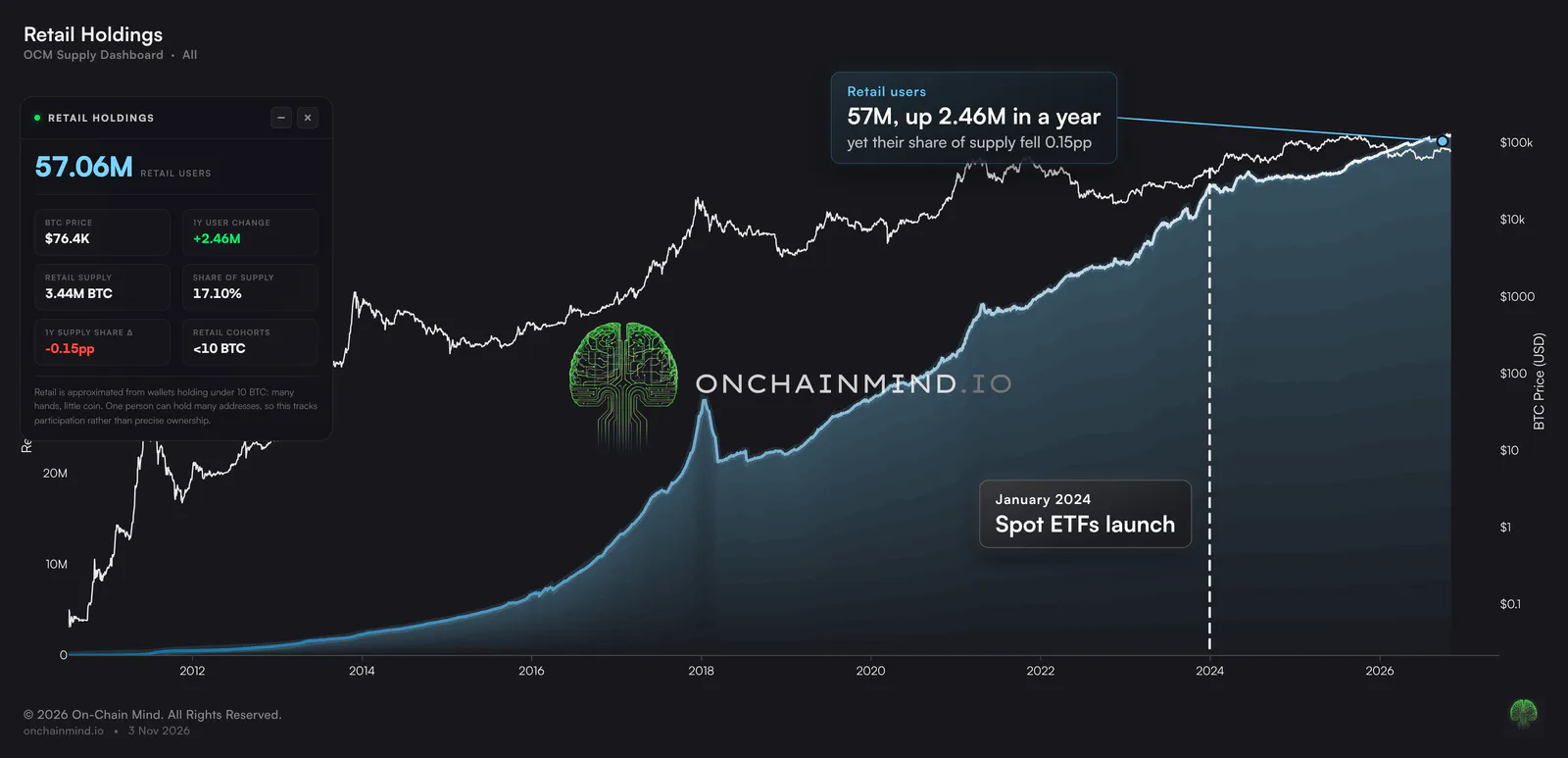
And it isn't because retail stopped turning up. The Retail Holdings view estimates 57 million retail users today, up about 2.5 million in the last year alone.
Yet over that same year, their share of the supply fell by 0.15 percentage points.
More people, but a smaller share.
Since the ETFs launched, there are about 5.7 million more shrimp addresses, yet the shrimp and crabs together now hold about 133,000 fewer BTC than they did.
So where did the coins go? Mostly to the sharks. Since the ETFs launched, the shark tier has taken in about 1.35 million BTC, and its share has climbed from 20.1% to 26.3%, an all-time record set this week.
The whales, meanwhile, gave up about 487,000 coins, and the sharks have out-held them every day since early February 2025.
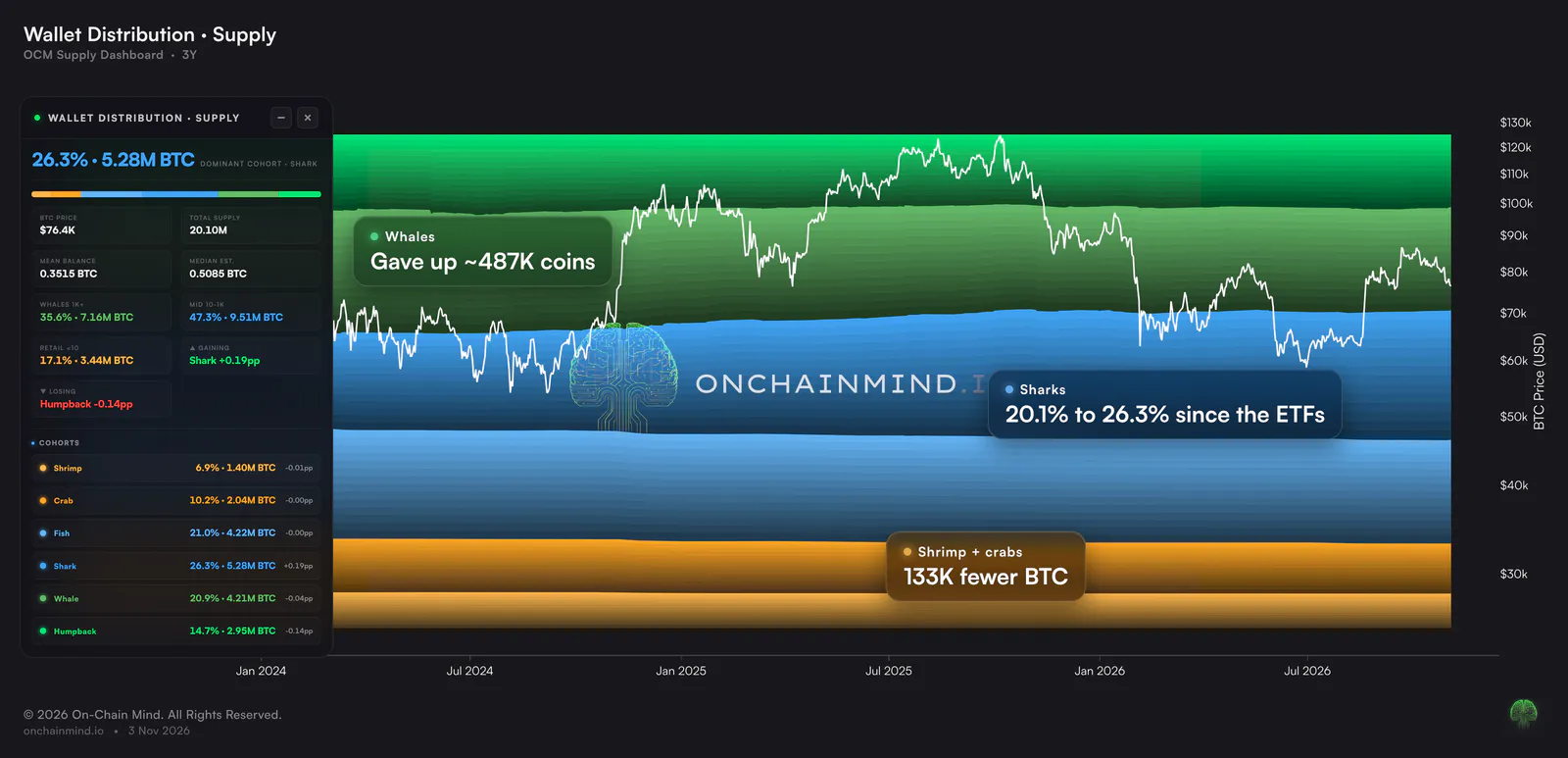
I can't prove exactly whose coins these are. But custodians and treasury companies tend to spread holdings across many separate addresses, and the pattern since the ETFs launched is hard to ignore.
My reading on it all is: retail didn't stop buying Bitcoin. A lot of it simply started buying through a brokerage account.
Those coins no longer show up in small wallets. They show up as institutional custody, spread across shark-sized addresses.
Bitcoin isn't becoming less retail. It's continuing its retail growth through a tidy wrapper.
The Middle Buys, the Top Hands Out
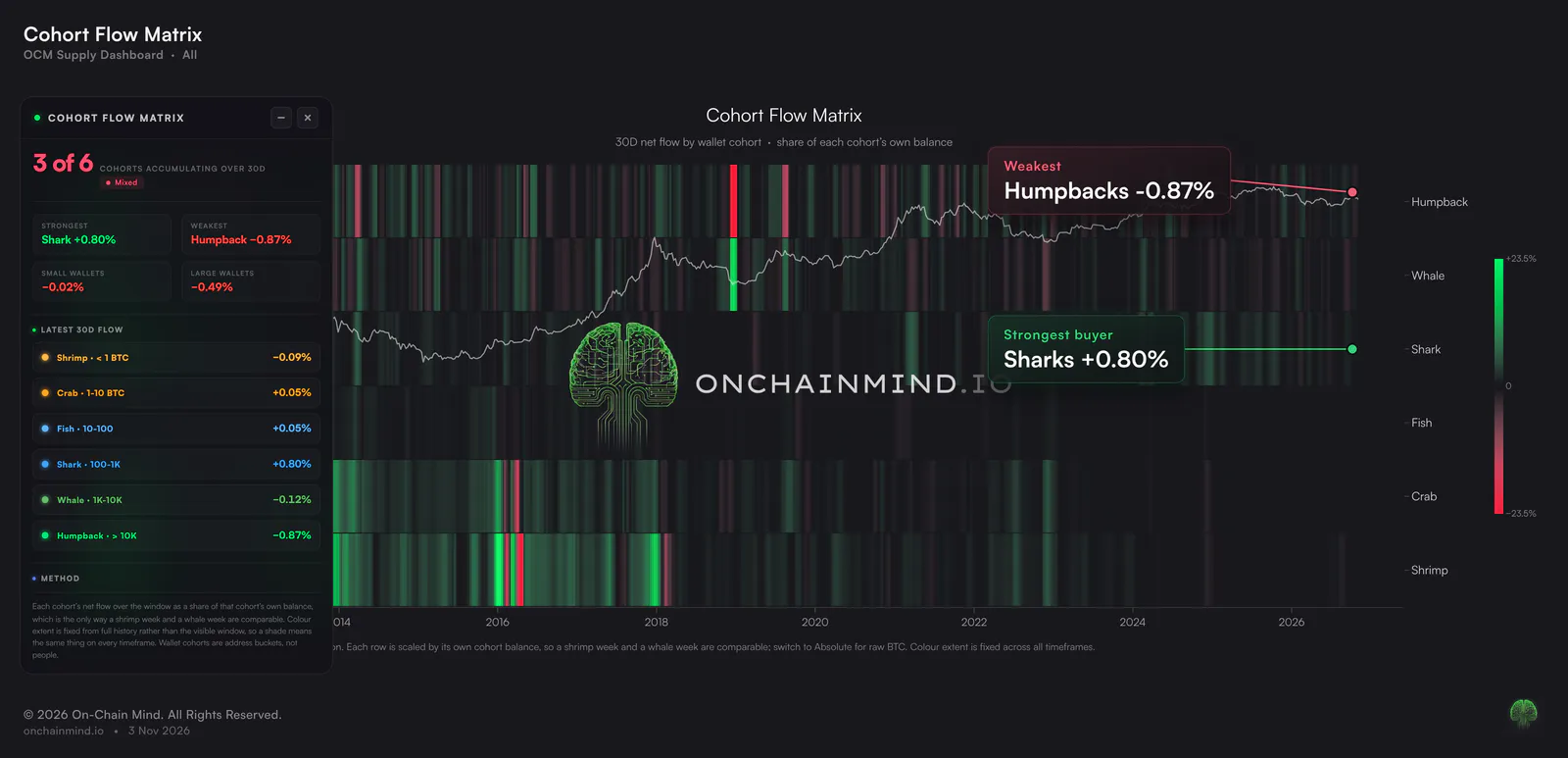
The Cohort Flow Matrix measures each tier's net flow over the last 30 days as a share of its own balance, so a shrimp and a humpback can be compared fairly.
Over the past month the sharks are again the strongest buyer, up 0.80%, and the humpbacks the weakest, down 0.87%. Small wallets are flat.
3 of the 6 tiers are accumulating, which makes the regime mixed. The middle is still buying and the very top is handing coins out, which fits with what I wrote in The October Whale Report at the weekend: the big buyers, the ETFs and Strategy, all stepped back in October.
Shallower Bears, Steadier Climb
So what does this mean for price? There are two sides.
First, a broader, stickier holder base tends to fall less. Measure every bear market from the all-time high on a daily close:
- 2015: 85% below the peak
- 2018: 83%
- 2022: 77%
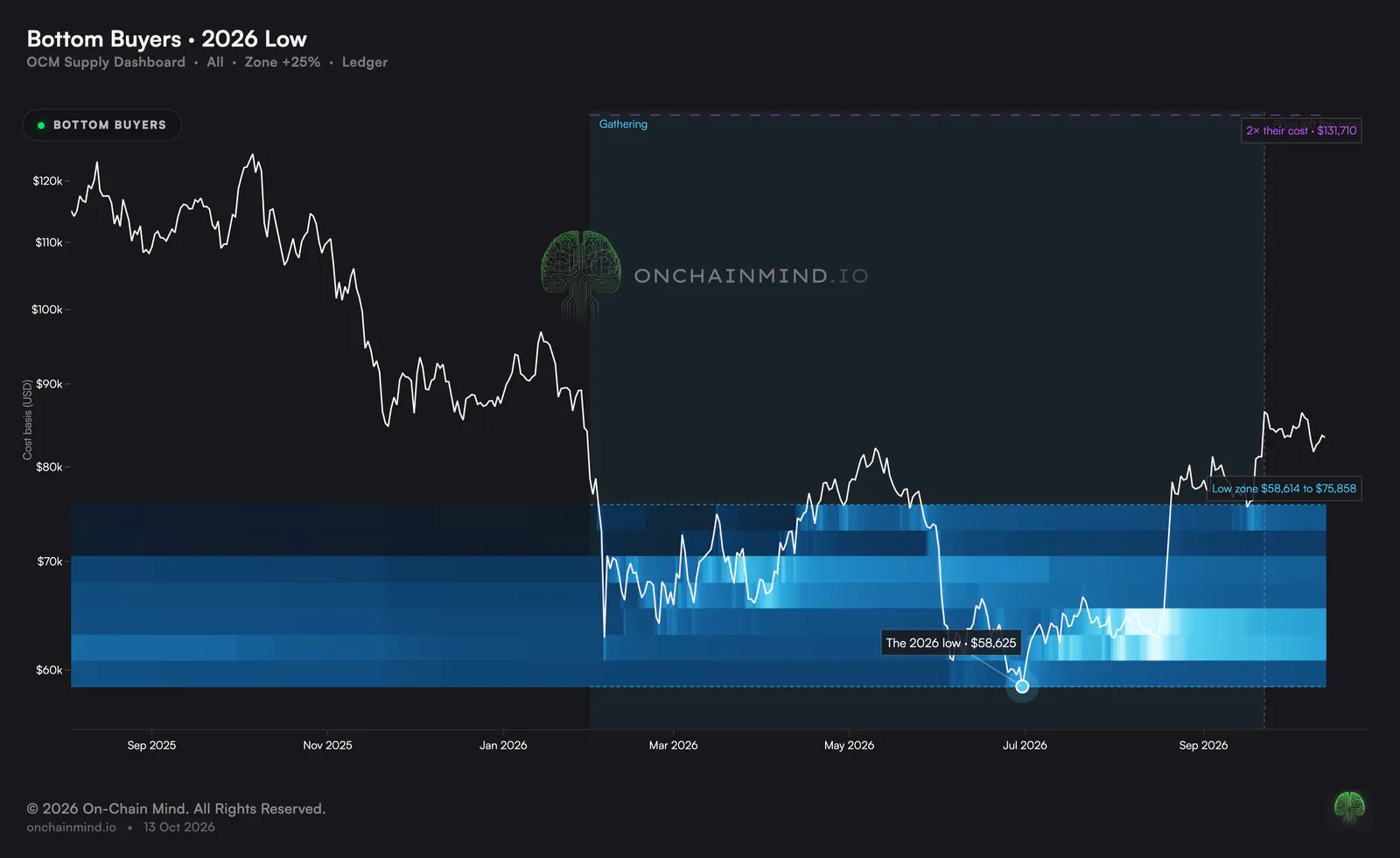
- 2026: 53%, from October 2025 to $58.6K in June 2026
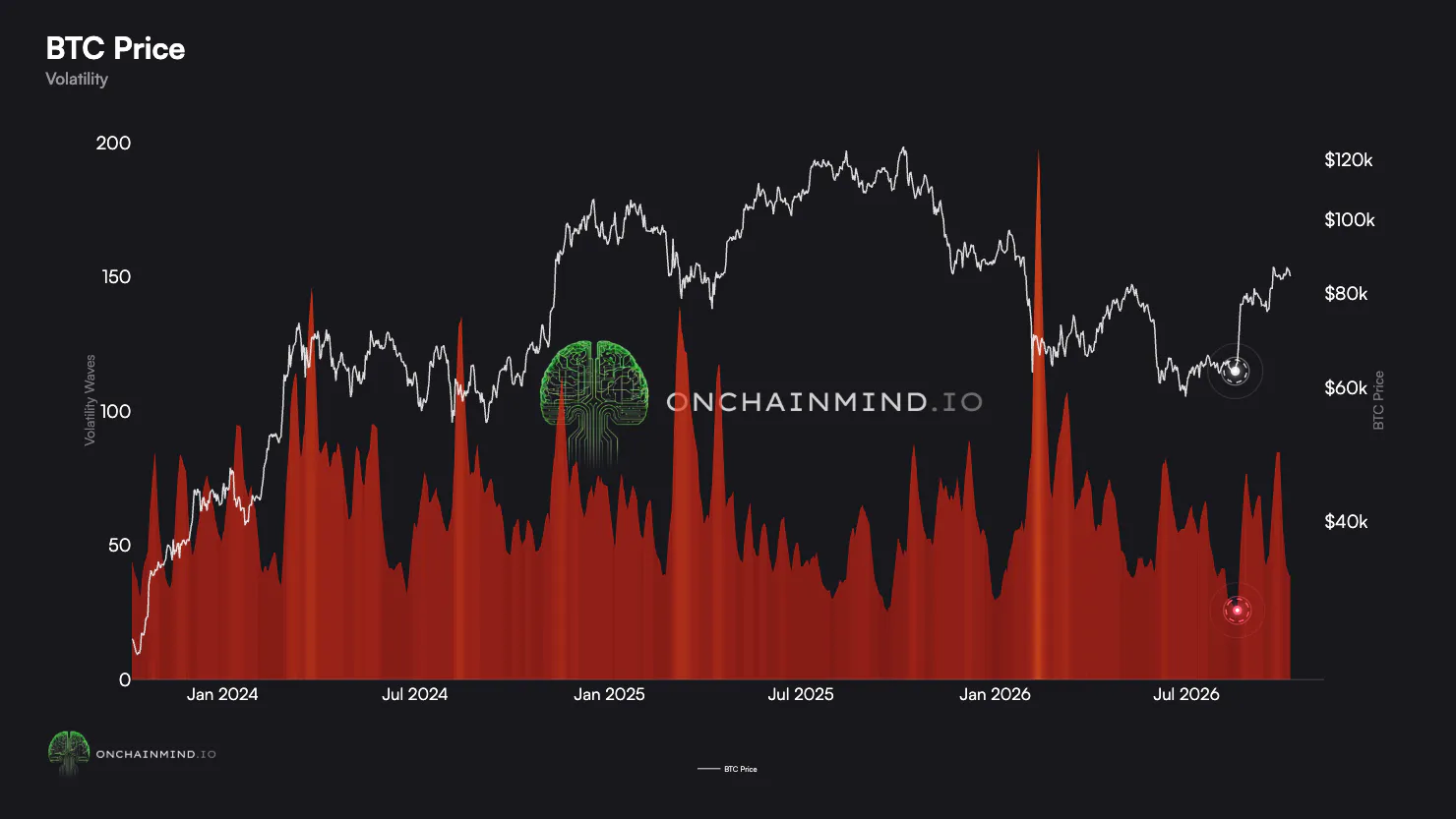
Back in October I wrote that Bitcoin is now less volatile than Nvidia and Tesla, and I think this is a big part of why. When more of the supply sits with people and vehicles that don't panic sell, there are simply fewer coins left to dump at the bottom.
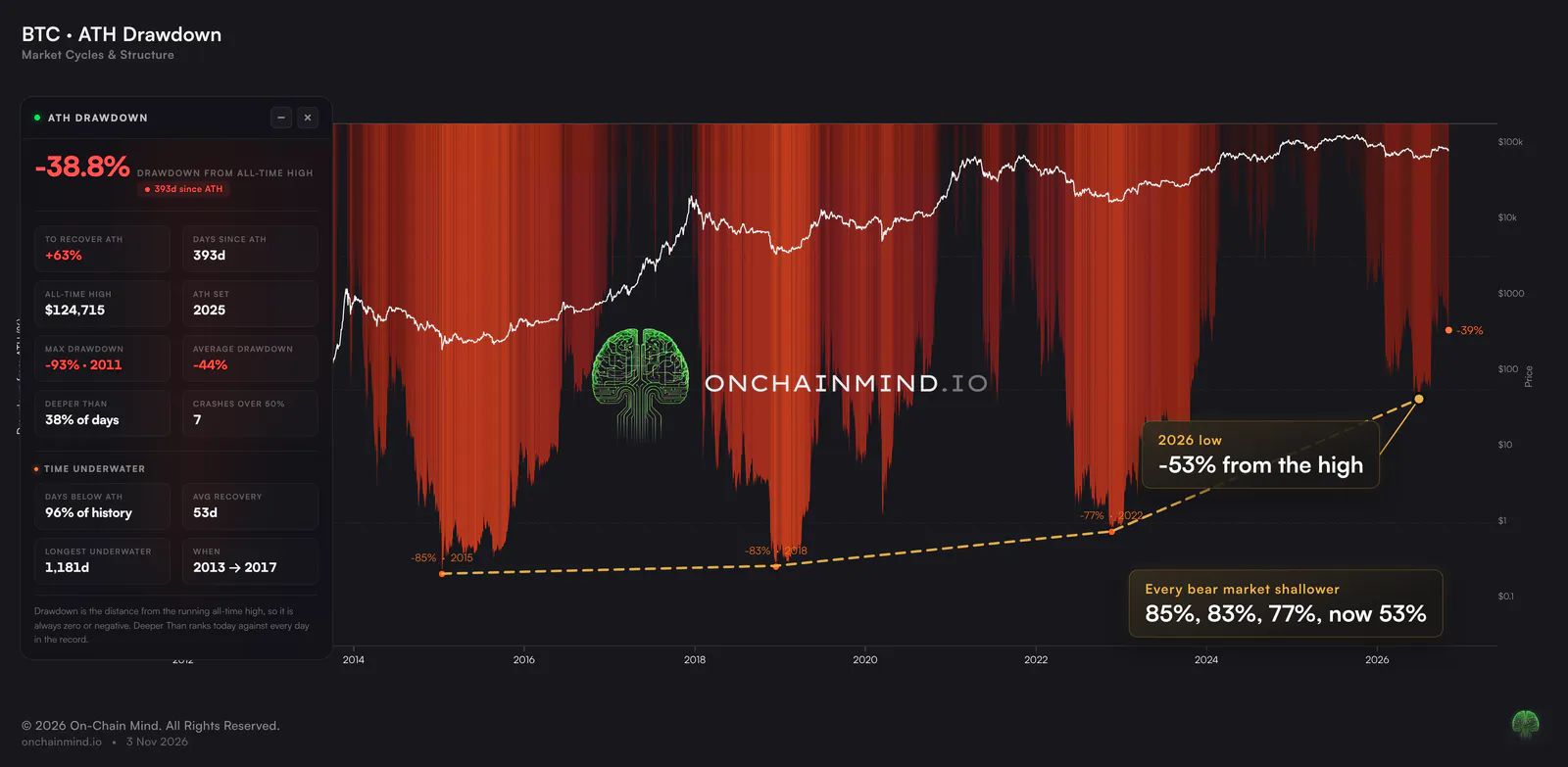
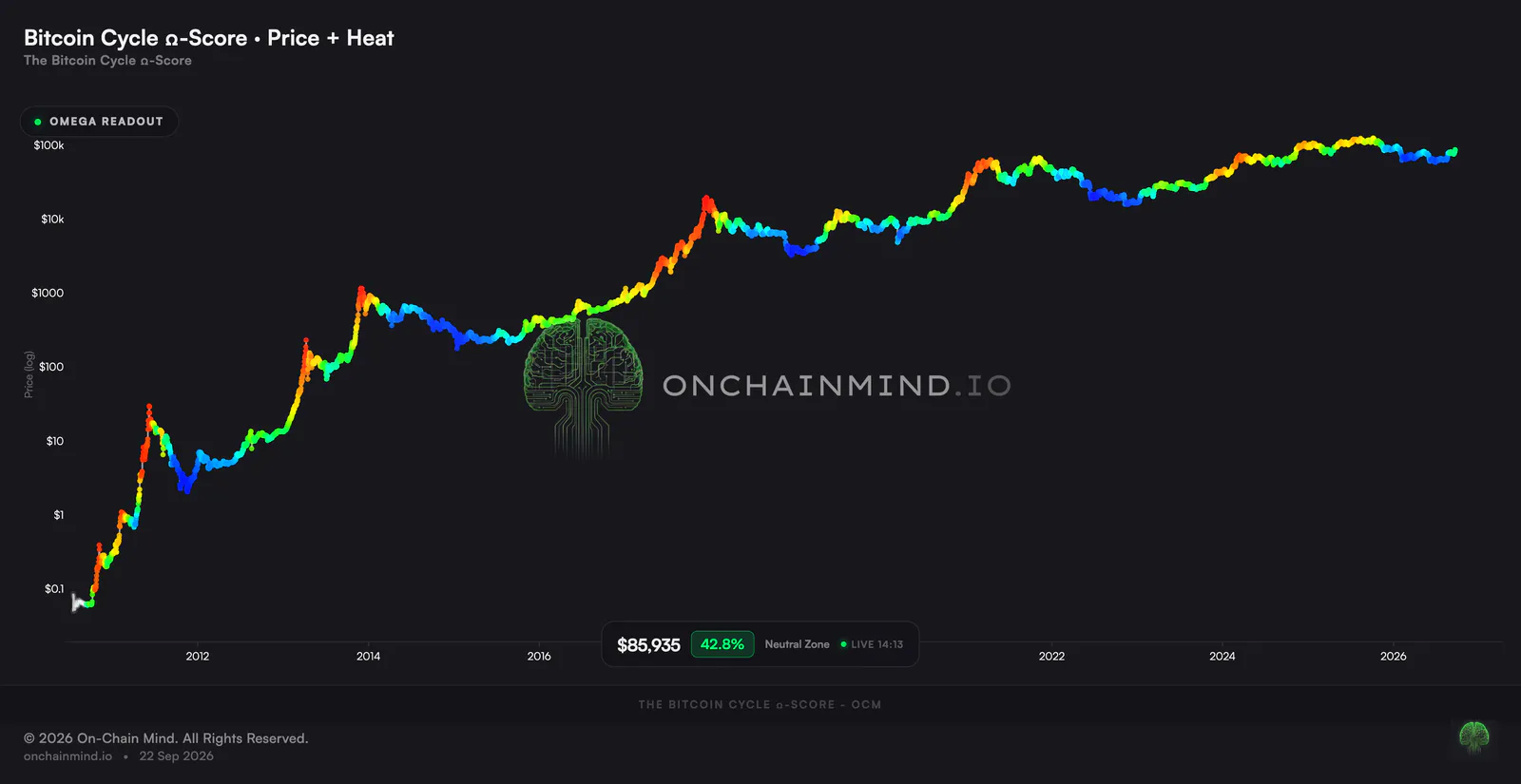
The other side is that the same shift tempers the upside. A market that falls 53% instead of 85% is far less likely to deliver the giant multiples of the early cycles. That's the trade-off of Bitcoin growing up: a steadier climb rather than boom and bust.
But there's a bullish twist, and it sits with the real float. If only around 13 million coins can realistically trade, and institutions keep pulling coins out of that pool, the next big wave of demand doesn't need to be enormous to move price a long way.
More Hands, Fewer Free Coins
I'm happy to be wrong on this, because there are real risks.
Concentration cuts both ways. A treasury company under pressure can become a forced seller, and some of the smaller ones have already sold this year. Not every ETF holder is a long-term believer, and some will sell at break-even. This holder base hasn't yet been tested across a full cycle.
But the structure is clear. Two thirds of Bitcoin is still in private hands, the tradable float is around 13 million coins and shrinking, and the decade-long drift from big wallets to small ones stalled when the ETFs launched, not because retail left, but because it arrived through a wrapper.
So distribution is changing, but not in the way most people think.
The holder base is getting broader and stickier at the same time, with a much smaller float for the next wave of demand to fight over.
More hands, fewer free coins.
I'll catch you in the next one.
Cheers,